HiSiliconHI3520DV400DualCVBSBoard
Project: Board Introduction | page_id: 1326
Product Introduction
Board Size: 75*55mm
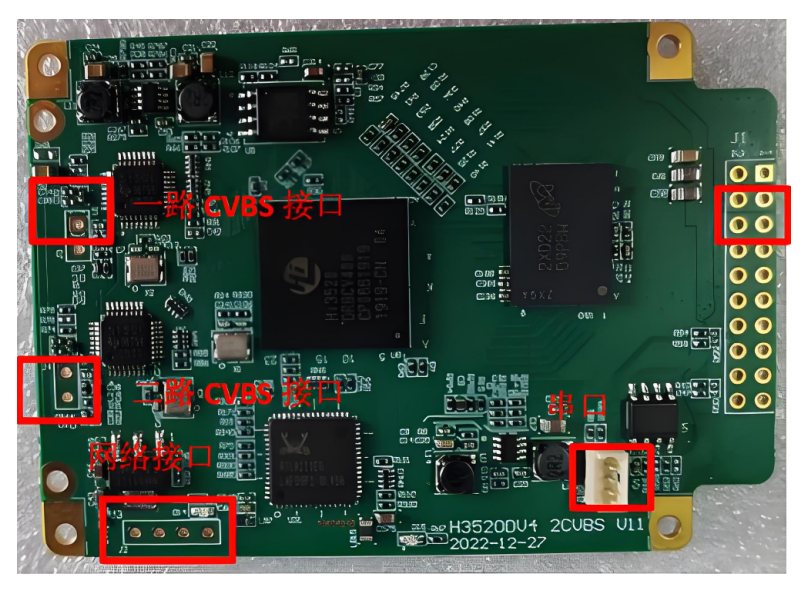
Chip Specifications
Processor Core
* ARM Cortex A7 dual core @Max.1.3 GHz
− 32KB L1 I-Cache, 32KB L1 D-Cache
− 256KB L2 Cache
− Supports NEON/FPU
Video Encoding
* H.265 Main Profile, Level 4.1 encoding
* H.265 Main Profile, Level 4.1 decoding
* H.264 Baseline/Main/High Profile Level 4.2 encoding
* H.264 Baseline/Main/High Profile Level 4.2 decoding
* MPEG-4 SP, L0~L3/ASP L0~L5 decoding
* MJPEG/JPEG Baseline encoding
Video Encoding Processing Performance
* H.264/H.265&JPEG multi-stream codec performance:
− 4x1080p@15fps H.265/H.264 encoding + 4xD1@15fps H.265/H.264 encoding
+4x1080p@15fps H.265/H.264 decoding + 4x1080p@2fps JPEG encoding
− 4x720p@30fps H.265/H.264 encoding + 4xD1@30fps H.265/H.264 encoding
+4x720p@30fps H.265/H.264 decoding + 4x720p@2fps JPEG encoding
* Supports CBR/VBR/FIXQP/AVBR/QPMAP five rate control modes
* Max output bitrate 40Mbps
* Supports region of interest (ROI) encoding
* Supports color-to-gray encoding
Intelligent Video Analysis
* Integrated intelligent analysis acceleration engine, supports intelligent motion detection, perimeter protection, video diagnosis and other intelligent analysis applications
Video and Graphics Processing
* Supports de-interlace, sharpening, 3D denoising, dynamic contrast enhancement, mosaic processing and other pre-/post-processing
* Supports anti-flicker processing for video and graphics output
* Supports video 1/15~16x scaling
* Supports graphics 1/2~2x scaling
* Supports 4 occlusion regions
* Supports 8-region OSD overlay
Audio Codec
* Hardware implementation of multi-protocol audio encoding, supports ADPCM, G.711, G.726
* Software implementation of multi-protocol audio codec
Security Engine * Hardware implementation of AES/DES/3DES encryption and decryption algorithms
Video Interfaces
* Video Input Interface
− Supports 2 8-bit interfaces or 1 16-bit interface
− Each 8-bit interface supports 108/144MHz 4-channel D1/960H time-division multiplexing input, supporting a total of 8xD1/8x960H real-time video input
− Each 8-bit interface supports 144/148.5MHz 2-channel 720p time-division multiplexing input, supporting a total of 4x720p@30fps real-time video input
− Each 8-bit interface supports 148.5MHz dual-edge sampling or 297MHz single-edge sampling to achieve 4-channel 720p time-division multiplexing input, supporting a total of 8x720p@30fps real-time video input
− Each 8-bit interface supports 148.5MHz BT.1120 Y/C interleave mode input, supporting a total of 2x1080p@30fps real-time video input
− Each 8-bit interface supports 2-channel 1080p time-division multiplexing input through 148.5MHz dual-edge sampling or 297MHz single-edge sampling, supporting a total of 4x1080p@30fps real-time video input
− The 16-bit interface supports 148.5MHz BT.1120 standard mode and supports 1x1080p@60fps real-time video input
* Video Output Interface
− Supports 1 HDMI 1.4b HD output interface, max output 3840x2160@30fps
− Supports 1 VGA HD output interface, max output 1080p@60fps
− Supports 2 independent HD output channels (DHD0, DHD1), which can output through any HD interface (HDMI, VGA)
− DHD0 supports 16-screen output, max output 3840x2160@30fps
− DHD1 supports 16-screen output, max output 1080P@60fps
− Supports 1 CVBS SD output interface
− Supports 3 full-screen GUI graphics layers in ARGB1555 or ARGB8888, used for 2 HD channels and 1 SD channel respectively
− Supports 2 hardware mouse layers, format configurable as ARGB1555 and ARGB8888, max resolution 256x256
Audio Interfaces
* 3 unidirectional I2S/PCM interfaces
− 2 inputs, supporting 16-channel composite input
− 1 output, supporting dual-channel output
− Supports 16bit voice input and output
Network Interface
* 1 Gigabit Ethernet interface
* − Supports RGMII, RMII and MII interface modes
* − Supports 10/100Mbit/s half-duplex or full-duplex
* − Supports 1000Mbit/s full-duplex
* − Supports TSO to reduce CPU overhead
Peripheral Interfaces
* Supports 2 SATA3.0 interfaces
− Supports PM function
− Supports eSATA
* 2 USB 2.0 HOST interfaces, supports Hub function
* 3 UART interfaces, 1 of which supports 4 wires
* 1 SPI interface, supports 2 chip selects
* Supports 1 IR interface
* Supports 1 I2C interface
* Supports multiple GPIO interfaces
Memory Interface
* 1 16bit DDR3 SDRAM controller interface
− Max frequency 933MHz
− Supports ODT function
− Max capacity 1GB
− Supports automatic power consumption control
* SPI NOR/NAND Flash interface
− 1, 2, 4-wire SPI NOR/NAND Flash
− 2 chip selects, which can be connected to different types of Flash respectively
− For SPI NOR flash, each chip select supports a maximum capacity of 64MB
− For SPI NAND flash, the maximum capacity supported by each chip select is 512MB
− For SPI NAND flash, supports 2KB/4KB page size
− For SPI NAND flash, supports 8bit/1Kbyte ECC and 24bit/1Kbyte ECC
* Built-in 4KB BootROM and 16KB SRAM
Independently Powered RTC
* RTC can be independently powered by a battery
* Can choose to boot from SPI NOR flash, SPI Nand Flash or eMMC
Multiple Boot Modes Configurable
* Supports booting from BootROM
* Supports booting from SPI NOR flash
* Supports booting from SPI NAND flash
SDK
* Provides a development package based on Linux-3.18
* Provides audio codec libraries for multiple protocols
* Provides high-performance PC decoding libraries for H.265/H.264
Chip Physical Specifications
* Power consumption
− 2.0W typical power consumption
− Supports multi-level power consumption control
* Operating voltage
− Core voltage 0.9V
− CPU voltage 1.0V
− IO voltage 3.3V
− DDR3 SDRAM interface voltage 1.5V
* Package
− RoHS, TFBGA
− Pin pitch: 0.65mm
− 15mmx15mm package size
* Operating temperature: 0~70℃
II. Core Board Physical Parameters
* Size: 67*93mm
* 4Gb DDR3
* 128Mb Nor flash
Interface Circuits
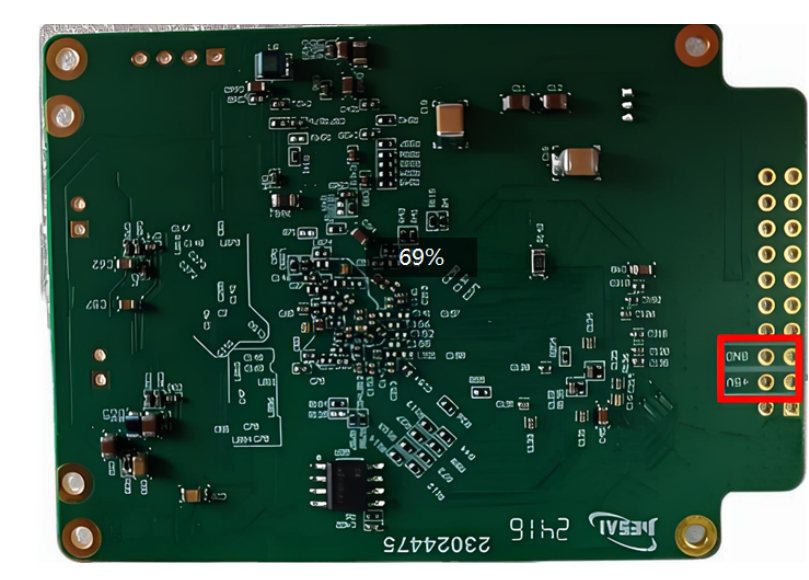
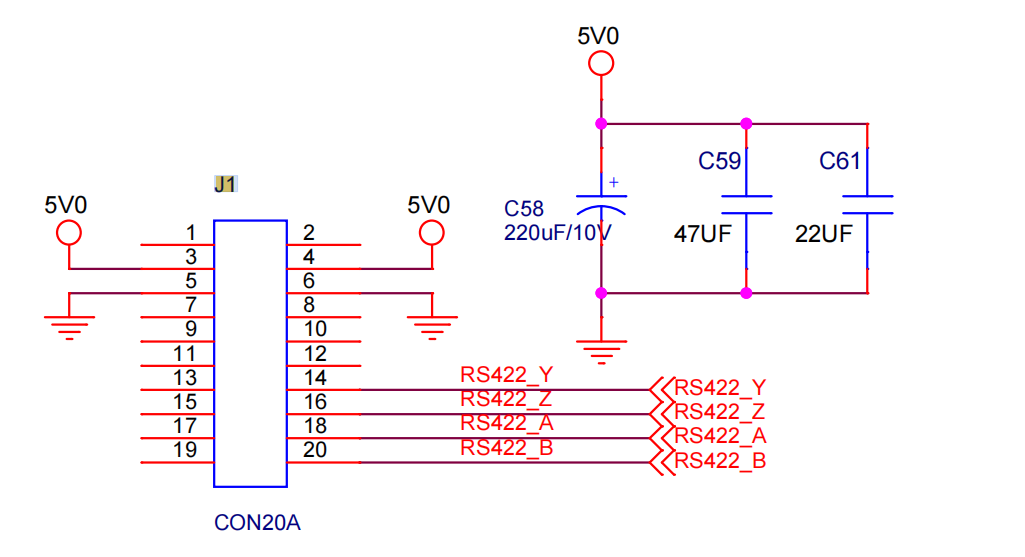
5V Power / RS422
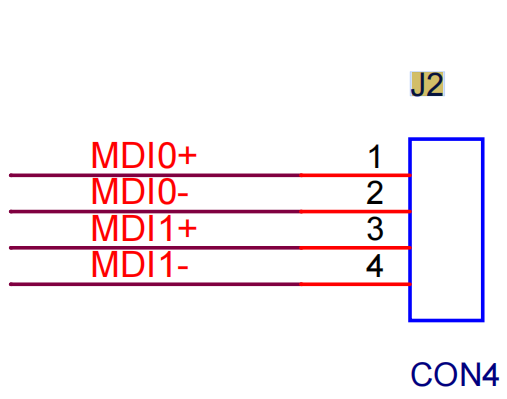
Network Port
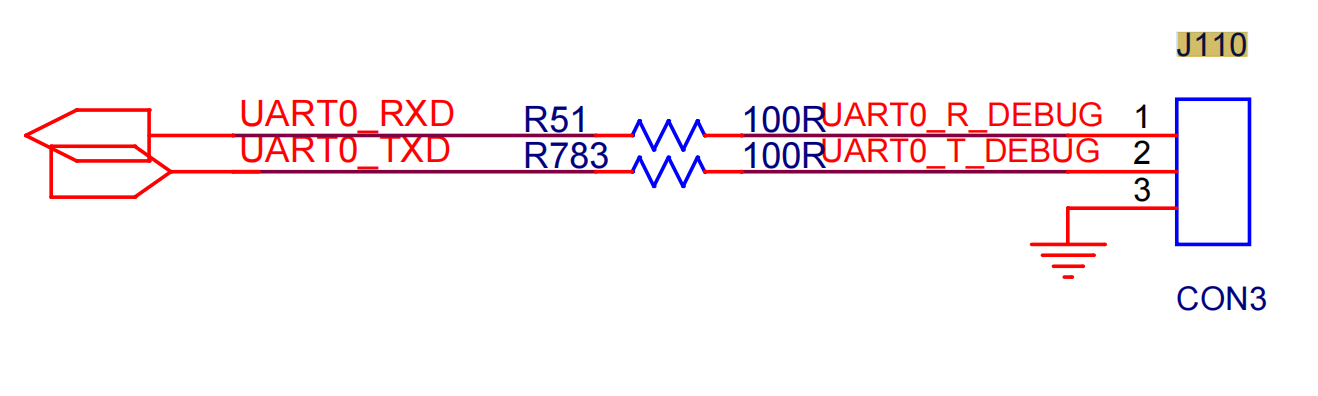
Debug Serial Port
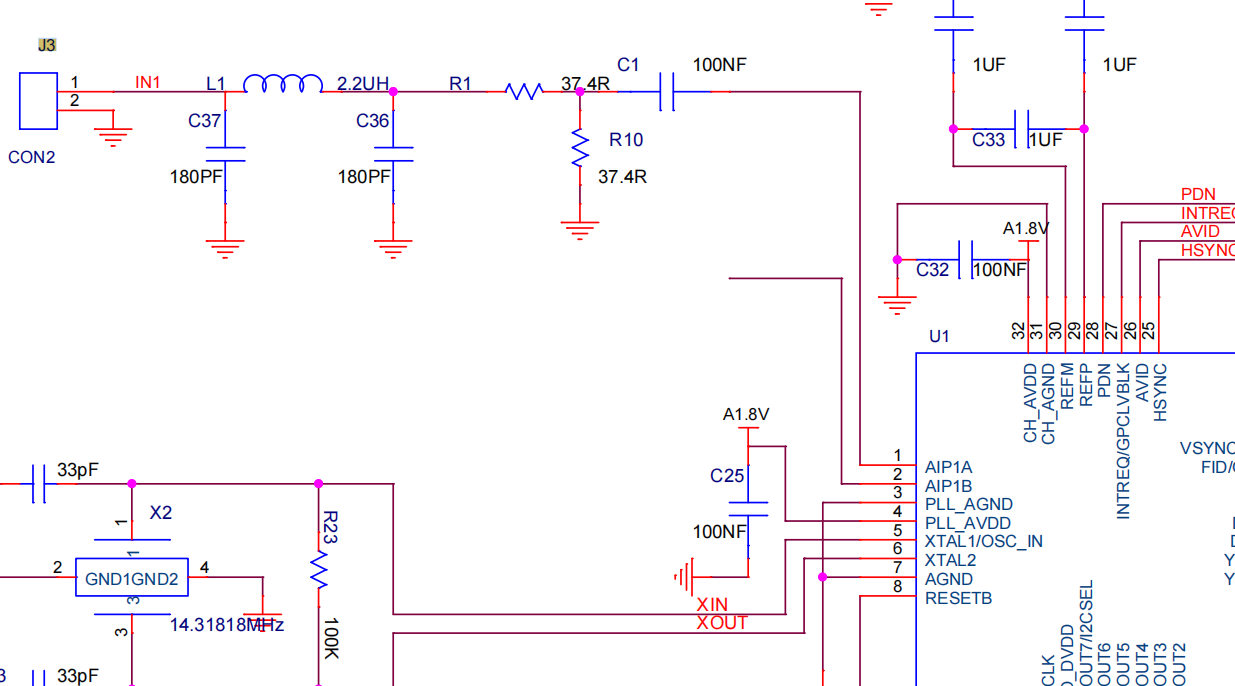
IN1_A_CVBS Interface
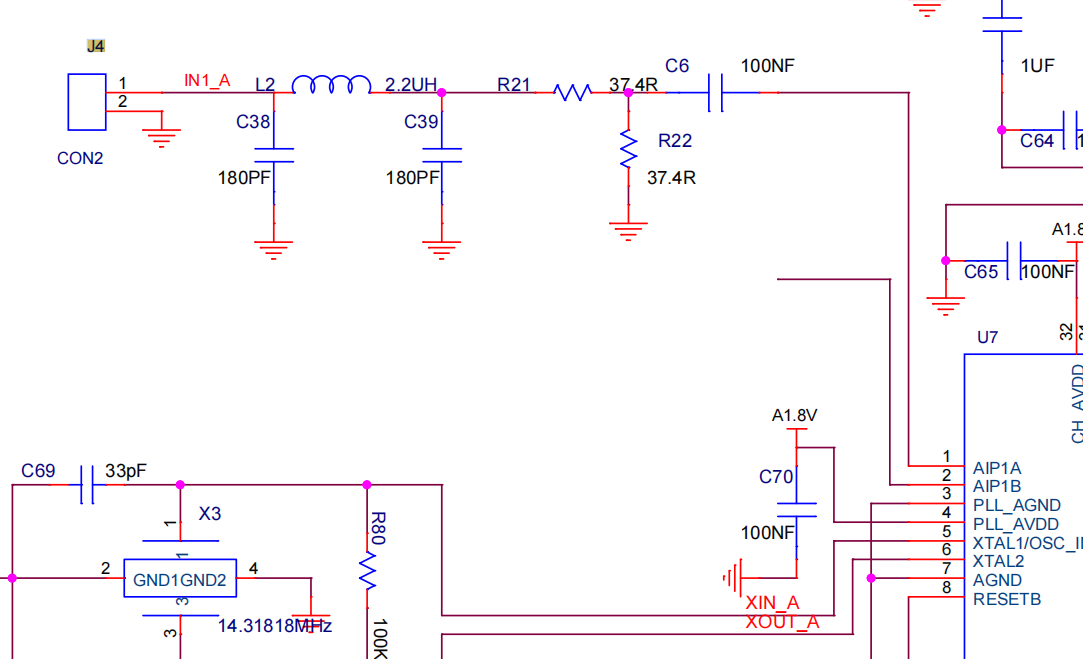
IN1_CVBS Interface